

A neutral room fails for one of two reasons: too little contrast, or too little texture. The first is easy to spot and easy to fix. The second is the one that leaves people staring at a perfectly nice beige room wondering why it feels like a waiting area.
Colour is what a room says. Texture is how it sounds when you are quiet in it.
— Linnea
Four layers, in this order
I build texture the way you would build a plate of food — something soft, something rough, something woven, something that catches light. Miss one out and the room reads as flat, no matter how considered the colours are.
01
Start with the softest thing
Linen, brushed cotton, an old wool throw. Soft goes first because it sets the room’s temperature, and everything you add afterwards is measured against it.
02
Add something with a knot in it
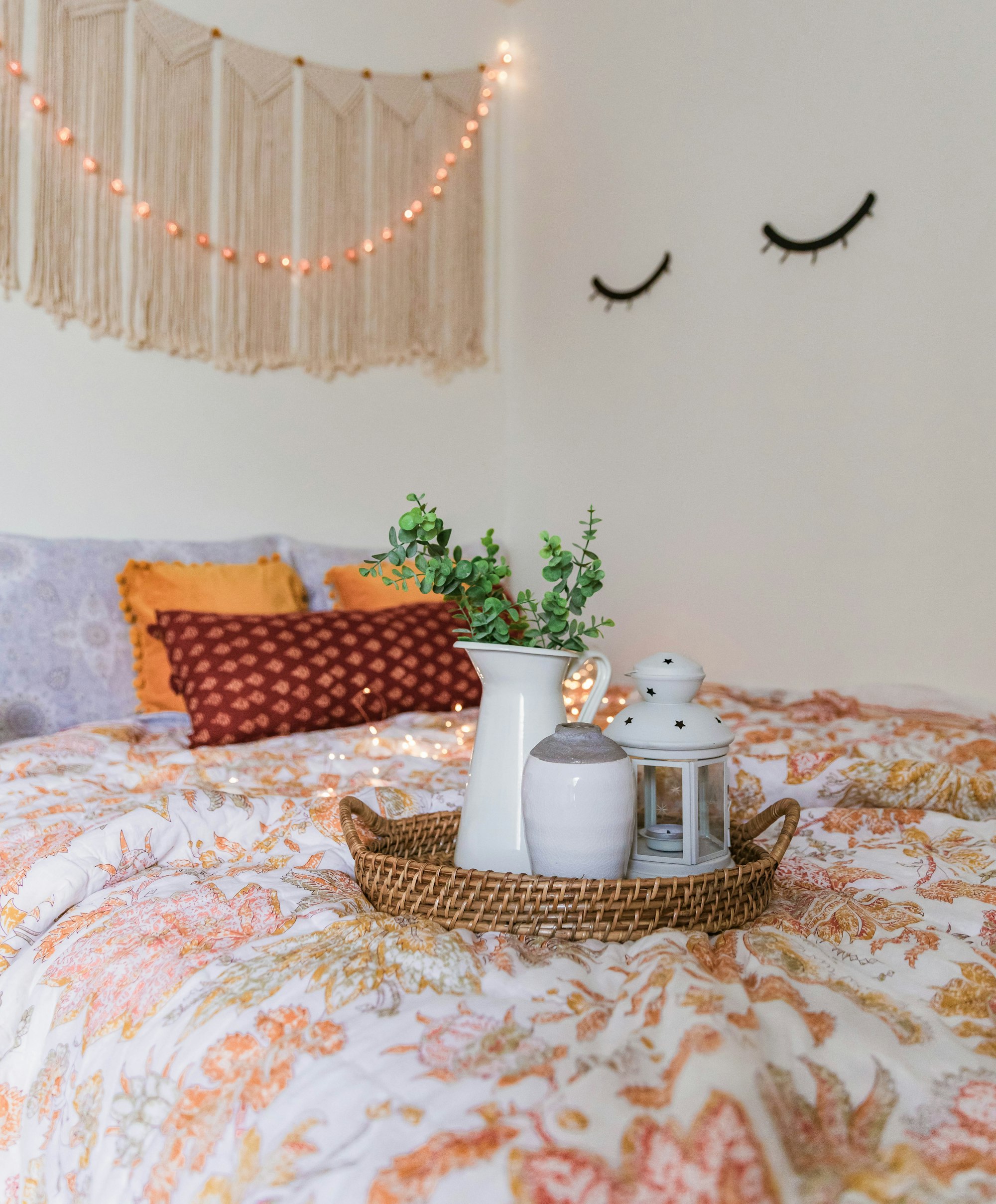
Macramé, jute, a rattan chair, a rag rug. Knotted texture casts tiny shadows all day, which is why a woven wall hanging changes a room far more than a framed print of the same size.
03
Bring in one raw, matte surface
Unglazed clay, plaster, raw timber. These absorb light rather than bouncing it, and a room without a single matte surface always looks faintly like a showroom.
04
Finish with something living
A trailing plant, a branch cut this morning, a bowl of whatever is in season. It is the only layer that changes on its own, and rooms need at least one of those.


✻ Note from Linnea
If a neutral room still feels flat after all four layers, the problem is almost never the palette — it is that everything in the room is the same distance from the wall. Pull one thing forward.
On macramé, and not overdoing it
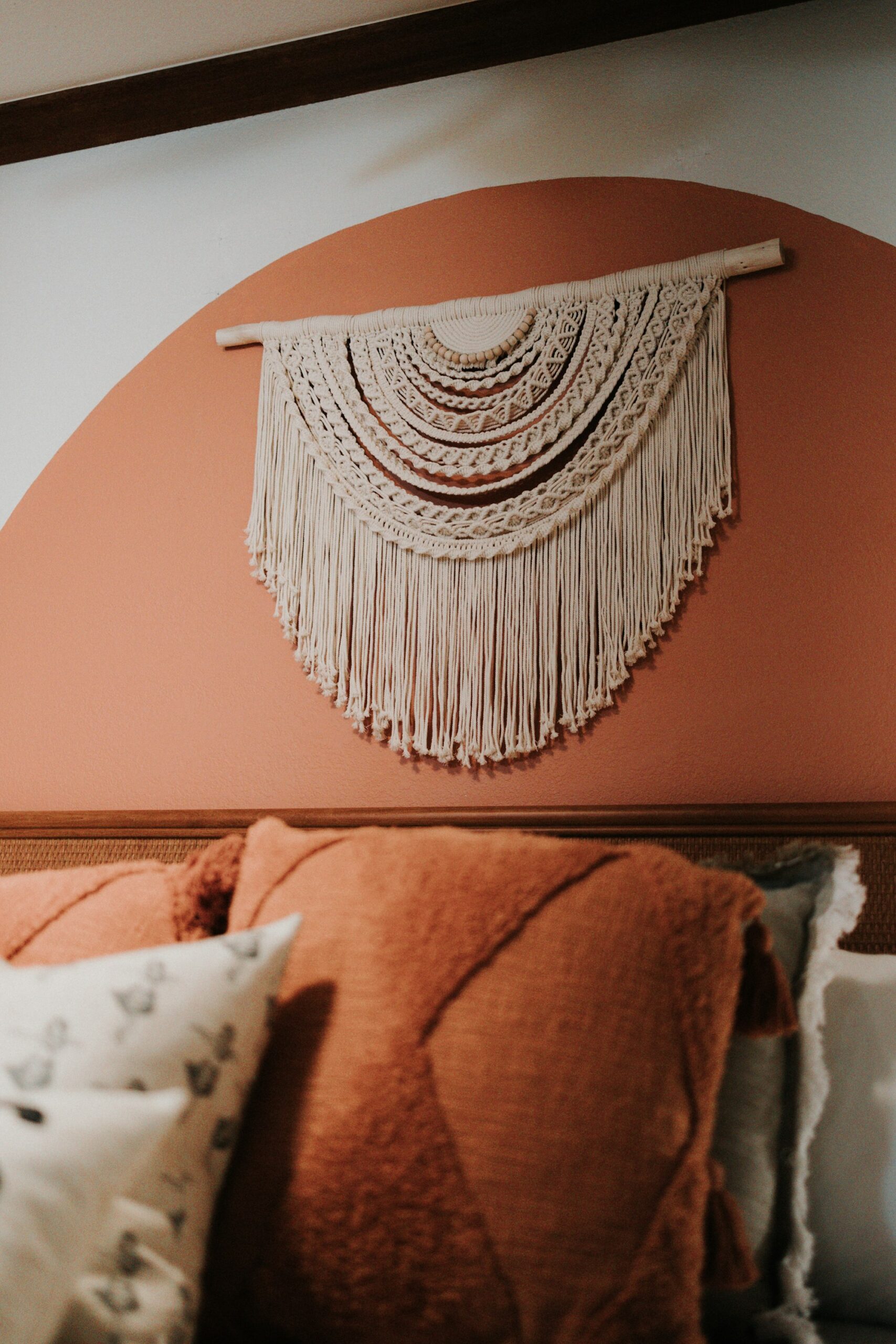
One large piece per room. That is the entire rule and I have broken it exactly once, in a bedroom that briefly resembled a craft fair. A single hanging reads as considered; three read as a theme, and themes are the fastest way to date a room.
Boho Home
Warm walls make knots glow
Against white, macramé reads as pale and slightly ghostly. Against terracotta or clay it suddenly has weight — the same piece, moved one room over, doing entirely different work.
Questions, Answered
Does layering texture work in a small flat?
Better, actually. Small rooms have fewer surfaces, so each one carries more weight — you need fewer layers to get there and it costs considerably less.
Won’t all these natural fibres collect dust?
Yes. A soft brush once a month handles almost all of it, and jute in particular improves with a bit of wear.
Can I mix macramé with more modern pieces?
That is generally when it looks best. Knotted texture against a clean, plain form keeps the room from tipping into costume.