

Four years ago this room held a flat-pack sofa, a rug bought in a hurry and a television nobody looked at. Nothing in it was wrong, exactly. It simply had no memory — every object had arrived on the same Tuesday and none of them had anything to say to each other.
What follows is not a shopping list. It is closer to a method: how to let a room arrive slowly, and how to resist the very strong urge to finish it in a weekend.
The method, such as it is
01
Live in the empty version first
Give the room a fortnight with almost nothing in it. You will learn where the light lands at four o’clock, which corner you actually sit in, and which wall you never once look at.
02
Buy the anchor, then stop
One large, honest piece — a sofa, a table, a rug you would carry between flats. Buy it well and then buy nothing for a month. The pause is the hard part and also the whole technique.
03
Collect the rest in ones
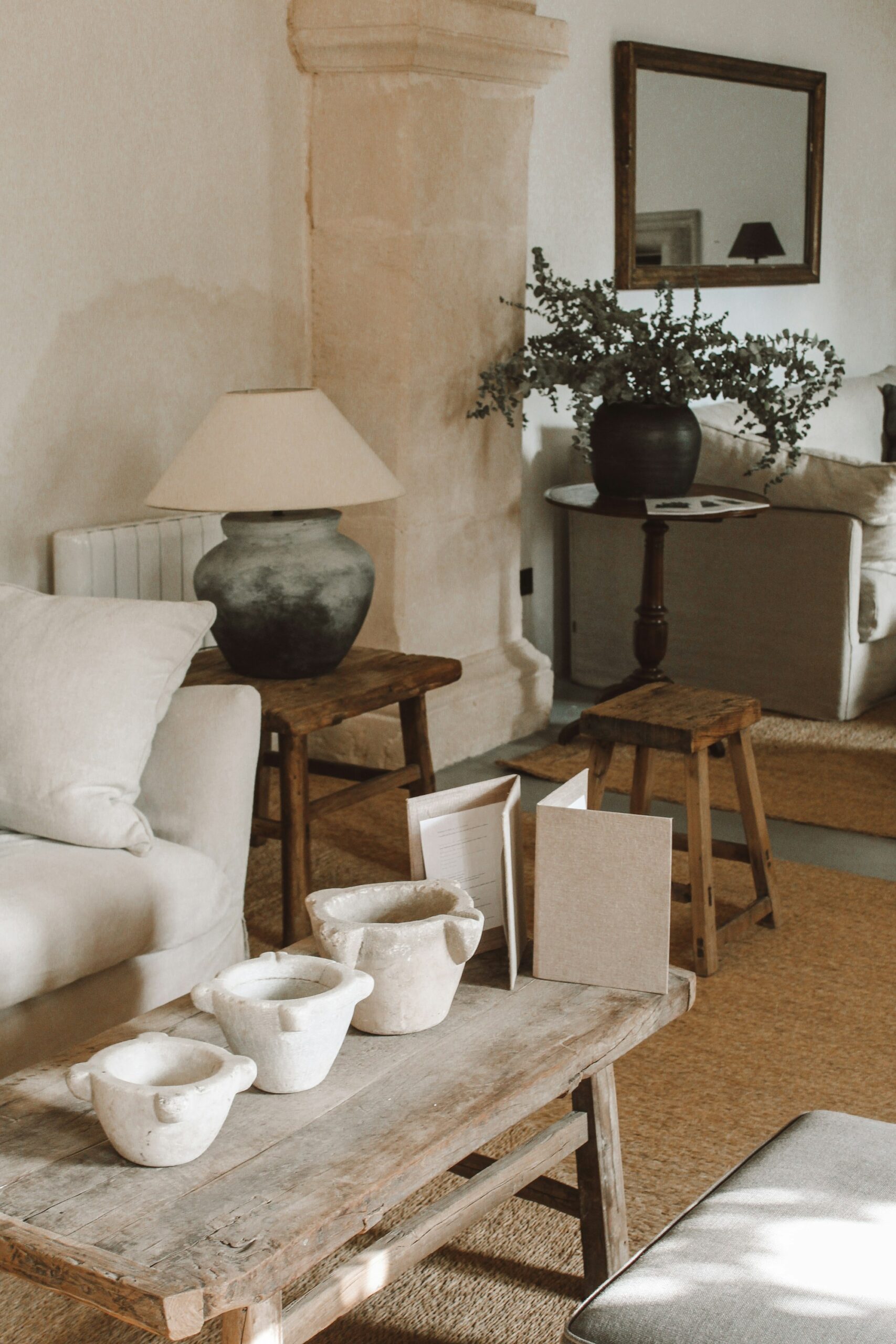
A stool from a flea market in March. A stoneware lamp in August. Objects acquired one at a time carry the date they arrived, and a room full of dates reads as a life rather than a catalogue.
04
Subtract before you add
Every time something new comes in, something leaves. Four years in, this is the only rule that has survived intact.
The Anchor
A rattan mirror and a great deal of patience
The mirror waited eleven months in a shop window three streets away before I finally gave in. It is too large for the wall by any sensible measure, which is precisely why the room stopped feeling careful and started feeling like ours.
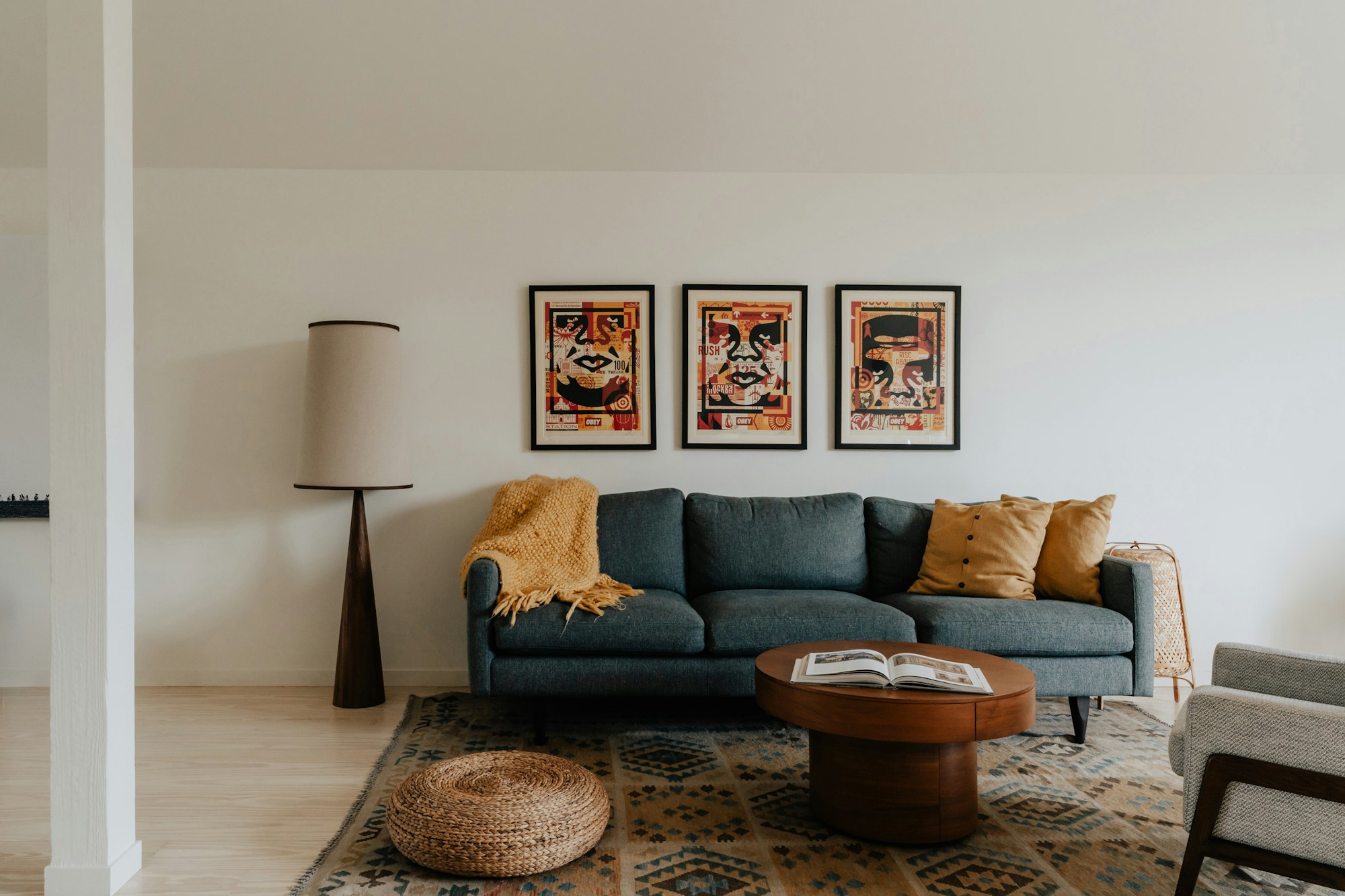
The corners we love most are always collected, never bought in one trip.
— Linnea
Where everything actually came from
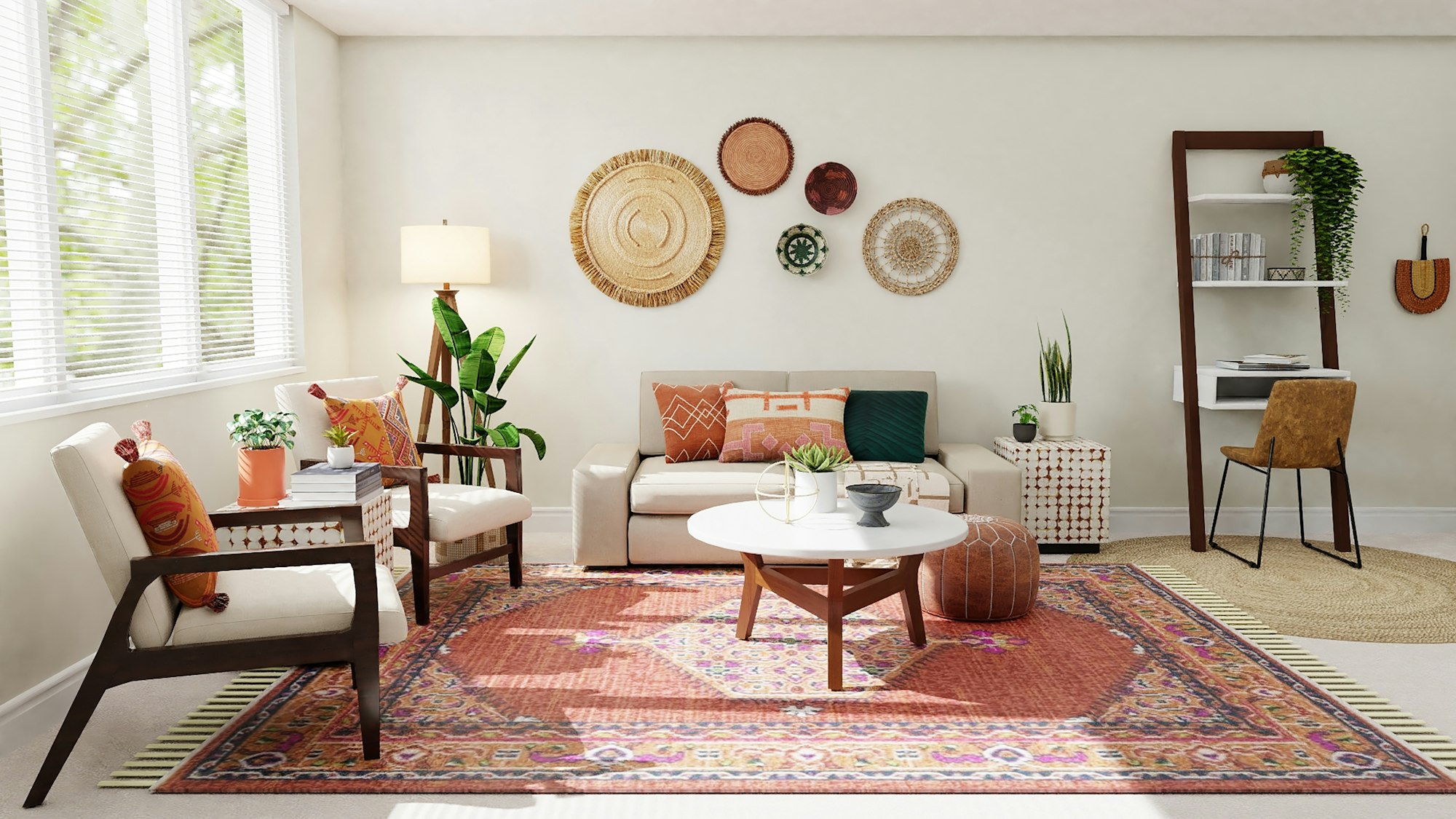
People ask about sources far more than about arrangement, so: the baskets are from a Sunday market and cost less than lunch, the dining chairs were rescued from a café closing down, and the paper lamp has been repaired twice with tissue and very steady hands.
Questions, Answered
Where do you find your vintage pieces?
Flea markets on Sunday mornings, estate sales, and the occasional lucky online find. Patience is the only real strategy — and a tape measure in your coat pocket.
Isn’t collecting slowly just an excuse for an unfinished room?
For about the first year, yes, honestly. Somewhere in the second the room stops looking unfinished and starts looking gathered, and after that you stop counting.
What would you buy first if you were starting today?
Light. A good floor lamp changes a room more than a new sofa ever will, and it costs a tenth as much.
Building your own slow room?
Save this method for the next time you are tempted to finish everything in one weekend.